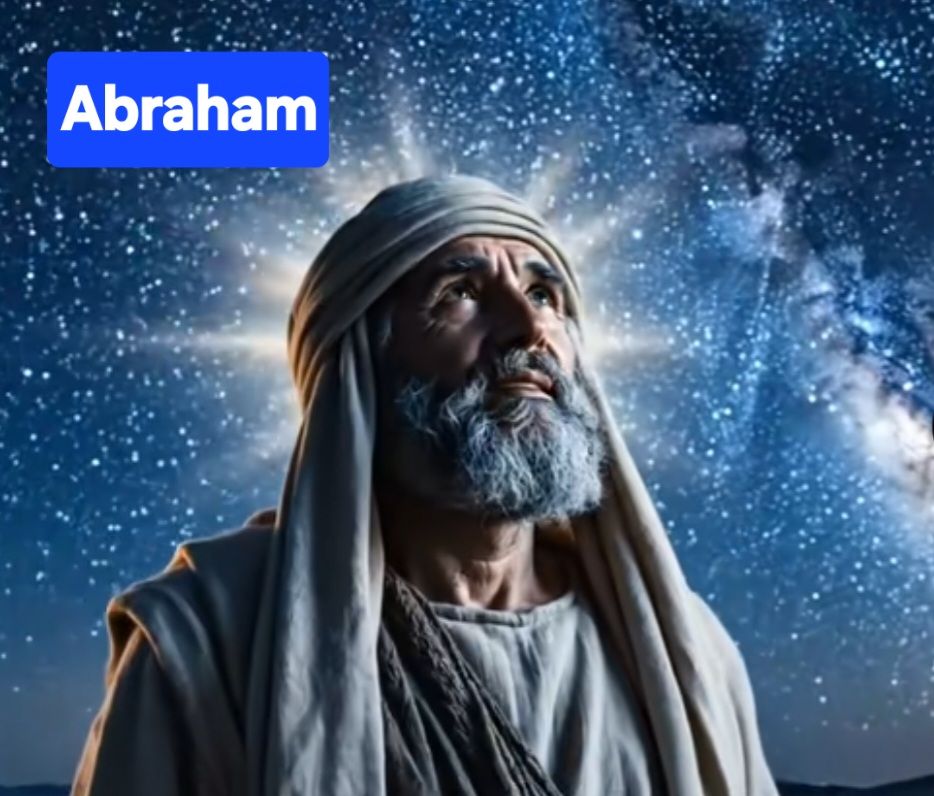
“For it is by grace you have been saved, through faith—and this is not from yourselves, it is the gift of God—not by works, so that no one can boast. For we are God’s handiwork, created in Christ Jesus to do good works, which God prepared in advance for us to do.” Ephesians 2:8-10 ❤️ I do not practice sin, yet I am still a sinner who falls short, saved by His ongoing grace and convicted to confess by my onboard Pilot, the Holy Spirit. I am not loved because I am worthy, I am loved by God, because He is love. Love is Who He is and He disciplines those He loves. God is so good, He is faithful when I am not. The first of my Heros of the Faith is God my heavenly Father. ❤️ Without a map, Abraham was fully convinced of God’s promise. He left his comfort zone to follow the voice of God in a desert. We have access to God by faith! “Faith is the substance (knowing) of things hoped for, the evidence (certainty) of things not seen. By faith we understand that the worlds were framed by the word of God, so that the things which are SEEN were NOT made of things which are VISIBLE.” Hebrews 11:1-3 NKJV HOLD ONTO YOUR FAITH!
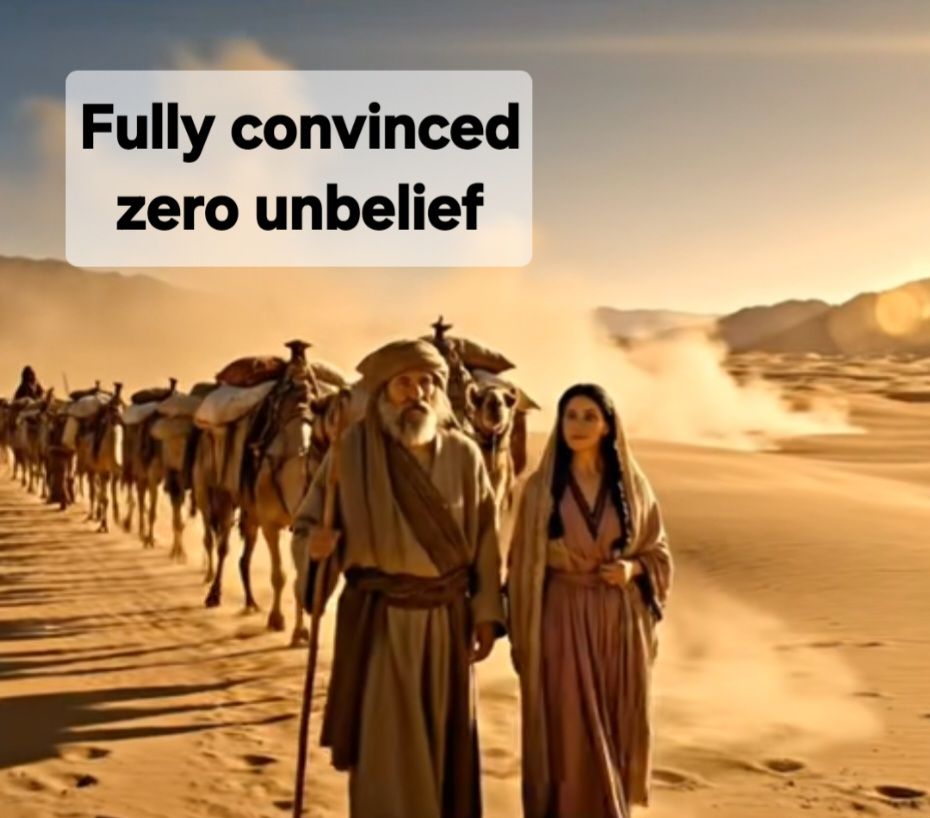
Abraham believed the voice of God. There was zero unbelief in him to make Abe waver in Who he loved more than what people thought of him. Convinced that God is faithful, he walked in faith. God’s word gives us the unfiltered truth. Believe or not believe, that is the test of our faith in God . “For yet a little while, and He who is COMING will come and will not tarry. Now the just shall live by FAITH; But if anyone draws back (doubts God), My soul has no pleasure in him.” Hebrews 10:35-38 DO NOT cast AWAY your full CONFIDENCE in GOD’S WORD and HIS promises! The word “faith” appears in the English Standard Version (ESV) of the Bible 244 times. The actual count may vary based on the edition or formatting of the text. Without faith we can not please God. Lord, I ask You to increase my faith in Your promises. I pray for more joy, patience, love, and compassion for others. In Jesus mighty name. AMEN and Hallelujah
Unlocking Faith: Exploring Hebrews 11 to Understand the Power of a Life that stays Connected to God. Why does one person pray and get healing as another prays and dies of cancer? Is God selective? Hebrews 11 reveals a pattern of faith. Faith is NOT about declaring scripture with optimism. Faith is a GIFT from GOD, and when we believe and pray God’s will, as we trust His purpose, we accept the outcome for GOD’S GLORY. May your faith awaken and ignite as you ask the Spirit of God to give you understanding as you read Hebrews 11. Great lessons from each saint is listed. Long before scrolls were available, Abel lived long before miracles, or nations. Abel brought God an offering along with his brother Cain. Both work, and both prepare to offer God a gift. The spirit behind Abel’s gift of his finest lamb, a real sacrifice. Abel did not offer what was convenient or what he could spare, but He gladly brought his most precious. Hebrews 11:4 “His sacrifice was better.” Not because it was outwardly impressive, but because it flowed from a heart of trust and honor. God looked past the smoke at the altar and saw his hidden motive. In Abel, we learn that faith is shown in what we offer God. In the unseen place of our heart, our intention is what brings God joy. Generations later, faith takes another shape in the life of Enoch, a man who walked with God in a devoted relationship of trusted reliance.

Scripture informs us that Enoch walked with God, not as a distant deity to visit occasionally, but as a close companion to share every day with. Enoch shared his ordinary thoughts with God as he worked, doubted, and grieved. Enoch continually turned his heart toward the Lord, speaking and listening as naturally as breathing. Enoch lived through 300 years of hardships. He relied on fellowship with God Almighty. Hebrews 11:5 “He did not experience death as others do.” Enoch was simply taken into heaven in one continuous step of communion. The faith of Enoch drew him near to God. He welcomed conversation in his daily routine. Genesis 4:17 “Cain made love to his wife, and she became pregnant and gave birth to Enoch.” So I pray 139 “Search me O God, and know my heart. Test me to see if there is any offensive way in me.” Holy Spirit lead me in the way of everlasting today. There is no where I can go away from Him. I do not desire to flee from His presence, nor could I. If I fly through the heavens, He is there; if I lay down in grief, He is there. The darkest days are not dark to God. For in the dark, He is the light. For my Father created my inmost being, my unseen spirit. He knit me together in my mother’s womb. And by His Spirit, I comprehend vast mysteries within His Word. My Father ordained all the days of my life. Each detour I would take, each doubt was known and corrected by His faithfulness. Each of my days is written in His book, even before one of them came to be. How vast is the sum of God’s thoughts towards me. They far out number the grains of sand, and yet when I awake, Holy Spirit waits for my attention. Here I am Lord, use me today. Amen
Faith is exemplified by Abel, Noah, Enoch, and Abraham. Their gift of faith defied human reason as they obeyed without fully understanding. Noah’s faith was tested not in a single offering or a lifetime of walking, but in his strict obedience. God asked Noah to build an ark in the middle of a desert for a coming flood? A specific design was given and day after day, Noah hammers while others mock him. Hebrews 11:7 “Noah acted on things not yet seen.” His faith in God’s word was trusted above the loud public opinion. Noah’s faith is a lesson in obedience. Before understanding, he began construction. Before rain, Noah trusted before visible wet proof. Abel, Enoch, and Noah together reveal that faith begins in the heart. It deepens in daily friendship with God, and it stands firm through costly obedience. When nothing seen makes sense, we trust in what is yet not seen. Abraham lived surrounded by all that people usually chase: land, livestock, servants, reputation, and the comfort of routine. God interrupted his life with a command that came with no map. Abel had no clear destination, and no explanation of what awaited him. “Go to the land I will show you.” Abe had no timeline, and no guarantee except the character of God who spoke to him under a canopy of stars. Abraham stepped out, not because he understood, but because he trusted. Hebrews 11:8 honors him for obeying even though he did not know where he was going. His life teaches us that faith rarely arrives wrapped in clarity or detailed plans. It often feels like walking with more questions than answers. Taking the next of faith on a road that leads to God knows where. Yet Abel, Enoch, Noah, and Abraham knew the One who walked beside them. The unknown becomes less threatening, and our obedience becomes an act of worship.

Beside Abraham stands a 90 year old Sarah, long past the age of child-bearing. She hears an outrageous promise that she will bear a son. Her first response is laughter, the kind that protects a heart from disappointment. A laugh of realism that collided with divine promise. But over time, that laughter is transformed from disbelief into wonder. Her skepticism turned to trust with the first kick of a child within. Hebrews 11:11 “She considered Him faithful who had promised.” Faith did not make Sarah pretend she was young again or ignore her limitations. Instead, it redefined what was possible in light of God’s power. We learn from Sarah that faith does not deny reality. Faith places reality under a greater authority. Age, weakness, diagnosis, and circumstance do not have the final word.
Our human impossibility becomes God’s canvas, and Sarah’s story quietly proclaims that it is never too late for God to fulfill what He has spoken. Next is Isaac, the son of Abe and Sarah. The promised son has faith to obey as Abraham leads him up the mountain. Isaac is not a helpless child. He was strong enough to resist, aware enough to ask, “Where is the lamb?” Yet he allows himself to be bound, choosing trust over escape. His submission reveals another side of faith. Faith is not the courage to conquer, but the courage to surrender when God’s ways are frightening or unclear. On that mountain, as God provides a ram for sacrifice, a pattern emerges that every believer eventually discovers. God may lead us into moments where everything in us wants control, yet it is in yielding that we see his provision most clearly. Abraham’s obedience, Sarah’s trust, and Isaac’s surrender together form a living portrait of faith that leaves the familiar, receives the impossible, and lays itself down in confidence that God will provide. Jacob then enters the biblical story as a man reaching for what is not his, grasping at blessing through deception. Jacob tricks his brother, deceives his father, bargains with God, and spends years manipulating circumstances to secure what he desires. His hands are always reaching, his mind always scheming, his heart always restless. Yet God chose him, and He does not reject Jacob in his brokenness. Instead, God begins a long, patient work of transformation. Through conflict, exile, family pain, and that mysterious night of wrestling with the angel, Jacob is slowly stripped of his illusions of control. Faith does not excuse our past, but the gift of faith enters into us to soften what is hard and reshape what is crooked. By the time we meet Jacob in his old age, leaning on his staff and blessing Joseph’s sons, we see a man who has been changed from the inside out. The one who once seized blessing now speaks blessing. The one who once demanded now gives. The one who once clung to his own plans now worships, acknowledging God as the true author of his story. In Jacob, faith is not a moment, but a lifelong journey that proves God can rewrite even the most tangled lives. God makes our mess His message of faithfulness for His glory.
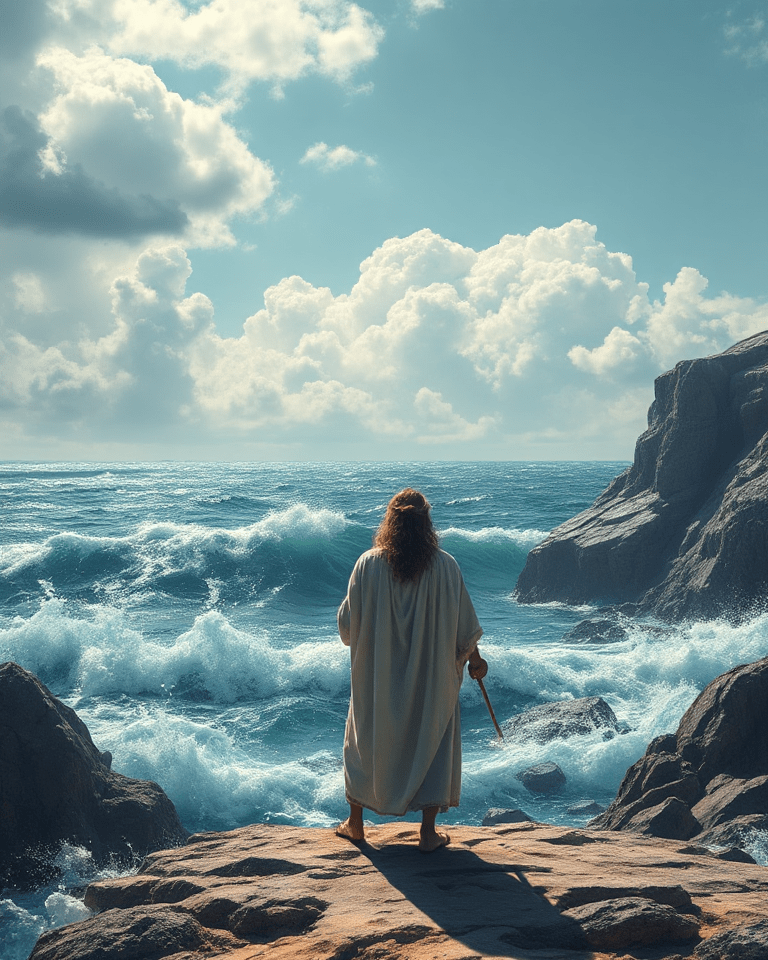
Faith’s Echoes throughout the life of Joseph, Jacob’s son. His faith stretches beyond his own lifetime. Sold as a slave by his jealous brothers, falsely accused, and forgotten in prison, Joseph is eventually elevated to power in Egypt He wears a royal robe, holds authority, and manages the wealth of a nation. In this luxury and influence, he remembers the promises spoken to his ancestors and knows, deep within, this is not my home. “I’m a citizen of heaven.” His final request reveals where his hope truly rests. He asks that when God, not if, but when God delivers Israel, they will carry his bones back to the land of promise. Joseph’s faith reaches across centuries, anchoring future generations to the certainty of God’s faithfulness. We learn that genuine faith is never confined to our personal comfort or our present moment. Allow your faith to build a legacy, as you accept God’s will for your life. Suffering well in life whispers courage to those who come after us. In a world ruled by Pharaoh’s decree, the parents of Moses saw something more than a statistic in an empire’s cruel policy. They saw a child marked with purpose. By faith in the God of Abraham they chose to hide Moses in a basket on the Nile. Hebrews 11:23 tells us they were not afraid of the king’s edict, because they believed there was a higher authority than Pharaoh. When fear shouted of impossibility, faith spoke more quietly, yet more powerfully of God’s sovereignty over their son’s destiny. Their choice to protect what God had entrusted to them became the foundation for the deliverance of an entire nation. Through them, we see that sometimes the greatest acts of faith happen in the shadows, in the hidden decisions to guard, nurture, and suffer well. Our faith thrives inbetween vulnerability and trust. What we dare to pray for, a child, a sickness, a calling, may well be the very instrument God uses to encourage faith in others. free. Moses made a costly choice to follow the God of Abraham before He spoke to God on the mountain. He chosw to be identified with the enslaved Hebrews, rather than to enjoy the fleeting pleasures and treasures of Egypt. He walks away from status to stand with the oppressed, trading a royal identity for a calling that will lead him into the wilderness, into conflict, and into hardship. The faith that once hid him now calls him to step into the open, not as a protected child, but as a servant of God’s purpose. Moses’ life proclaims that faith does not always lead to an easier path, often it leads to a truer one. “I would rather suffer in obedience than prosper in compromise.” There is no escape route, no clever strategy, no human solution, only the certainty that by natural means, death is waiting either way. Into that impossibility, God commands them to move forward, not backward. At the Red Sea, we see that faith is not blind optimism. It is the courage to step when God opens a way no one else can see, trusting that what overwhelms others does not have to define our story.
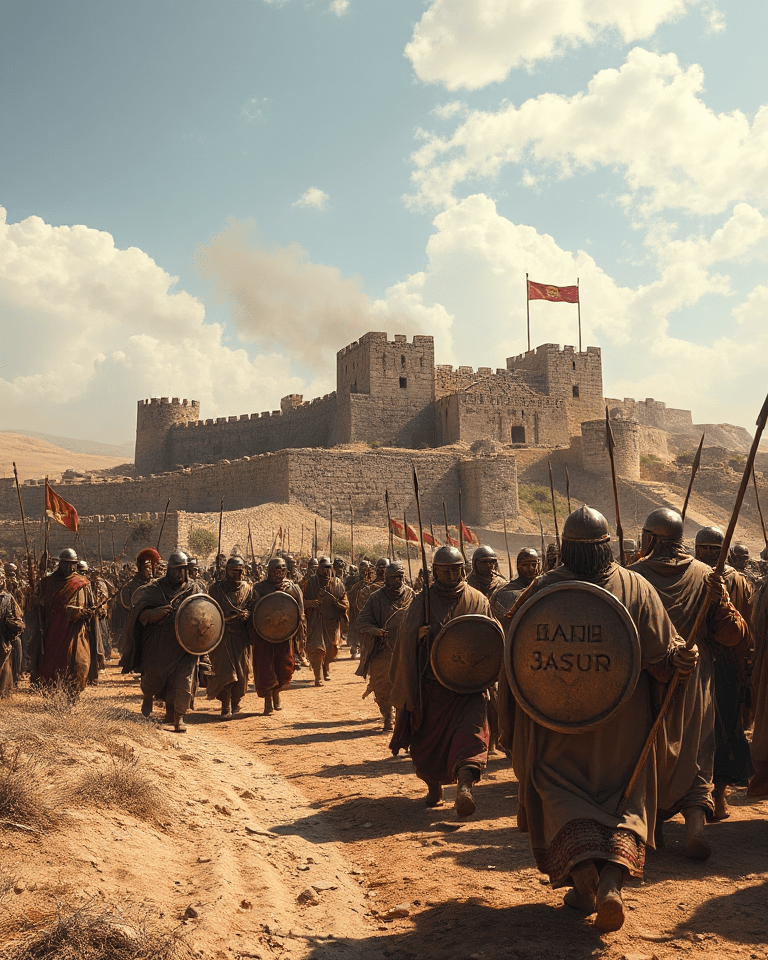
Jericho stands as a symbol of human strength, impossible to crack by ordinary means. Yet the instructions God gives Joshua sound nothing like a battle plan. March around the city in silence, day after day, then on the seventh day, circle it seven times, blow the trumpets, and shout. No military handbook would recommend such a tactic, but heaven is not bound to human logic. Obediently they march in faith while trusting that God’s wisdom is greater than their understanding. Jericho teaches us that faith often looks strange from the outside, yet it unlocks victories that human strength alone could never achieve. And within that same city stands Rahab, a prostitute whose story is in faith’s hall of honor. Rahab feared and believed in the unseen God of Israel. Her unlikely lifestyle was flawed yet God reveals that faith triumphs over sin. Rahab lived in the margins, but when she hears of the God of Israel, something awakens in her heart. She chooses to hide the spies, to side with the God she has only heard rumors about, trusting that His mercy might extend even to someone like her. Her fear of the Lord was the start of awakening wisdom. Rahab and her household are spared, she is welcomed into God’s people, and astonishingly, she becomes part of the very lineage through which Christ will one day come. God not only makes a way through what blocks us, He also brings in those the world would leave out, turning impossible situations and unlikely lives into living testimonies of His great grace.
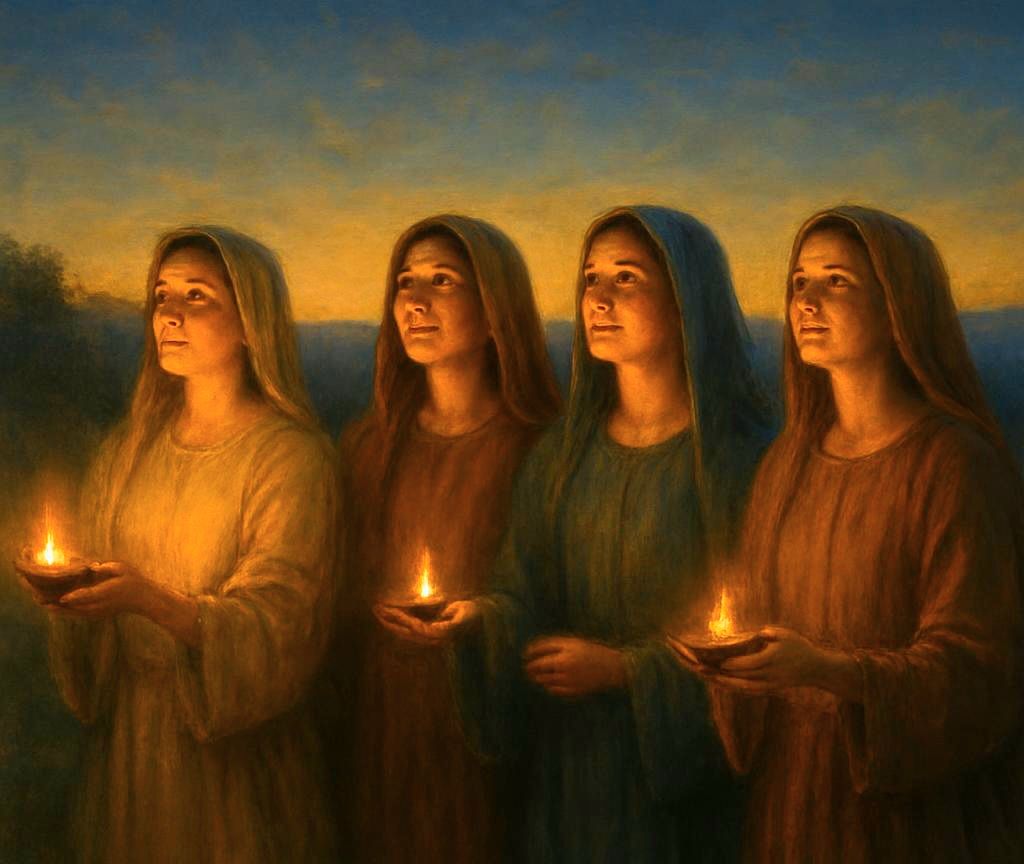
Gideon faced a battlefield where logic says he was doomed. His army began with 32,000 men, but God began to subtract what he relied upon. The fearful left and the remnant was only 300 soldiers with jars, torches, and trumpets as their weapons. God took away all reasons to boast of their own strength. We learn through Gideon that faith does not depend on our resources, or our impressive strategy, but God’s faithfulness. Faith rests on obedience to Gods voice and the victory belongs to the Lord.

Barak’s faith looks quieter, but no less strong. He was called to lead Israel and he did not pretend to be self sufficient. Instead, he asks Deborah, the prophetess and judge, to go with him. Some might call this weakness, but scripture remembers it as faith. God often works through partnership, through shared courage, through the wisdom and presence of others. Faith is not stubborn independence. Faith grows in community. Samson was marked by deep flaws and painful choices, yet still woven into the fabric of faith. Samson was gifted with extraordinary strength and a clear calling, yet he repeatedly squanders both through compromise and impulsive decisions. Only at the end, blinded and humiliated, does he finally turn his heart fully toward God. With his final breath, he prays, “Remember me,” and God hears, granting one last act of deliverance. Faith is not flawless performance, but the willingness to return. Jephthah, rejected by his family and driven out as an unwanted son, is later called back to lead the very people who cast him aside. His life is scarred by rejection and marred by a tragic vow, yet even in his brokenness, he reaches for God. Faithfully, God raises leaders from the very places others despise. Faith does not require a perfect past, only a heart willing to say yes. David’s story is full of failures, and yet what marks David as a man of faith is not a spotless record, but his response when confronted. When the prophet Nathan exposes his sin, David does not defend himself, shift blame, or hide behind his crown. He collapses before God in honesty, admitting, “I have sinned against the Lord.” He grieves not only the consequences, but the wound he has caused to God’s heart. In his Psalms, we hear a man laying down his pride, offering up a crushed spirit and a contrite heart. Faith, in David’s life, is not the absence of failure, but the choice to return, to open every broken place to God’s mercy. Scripture assures us, a heart laid bare in repentance is never rejected by him.

Marinate in this truth! “Blessed be the God and Father of our Lord Jesus Christ, who has blessed us in Christ with every (all) spiritual blessing in the heavenly places. He chose us in Him before the foundation of the world, that we should be holy and blameless before Him. In love He predestined us for adoption to Himself as sons through Jesus Christ, according to the purpose of His will, to the praise of His glorious grace, with which He has blessed us in the Beloved. In Him we have redemption through His blood, the forgiveness of our trespasses, according to the riches of His grace, which He lavished upon us, in all wisdom and insight making known to us the mystery of His will, according to His purpose, which He set forth in Christ as a plan for the fullness of time, to unite all things in Him, things in heaven and things on earth. In Him (submitted and abiding in Holy Spirit) we have obtained an inheritance, having been predestined according to the purpose of Him who works all things according to the counsel of His will, so that we who were the first to hope in Christ might be to the praise of His glory. In Him you also, when you heard the word of truth, the gospel of your salvation, and believed in Him, were sealed with the promised Holy Spirit, Who is the guarantee of our inheritance until we acquire possession of it, to the praise of His glory.” Ephesians 1:3-14 ESV
SING A NEW SONG of praise

I renounce the lie, that I don’t measure up! I renounce the lie that I’m unworthy of God’s love. So when shame comes knocking, and fear starts talking, I will lift my hands in God’s presence. Oh Lord, You remind me who I am. I am adopted, I am beloved, it’s my inheritance, I’m a child of God. So when the liar starts mouthing off, I’ll sing in confidence, my adoption song. I found my family, in His arms is where I belong. I plead the blood of Jesus and the accuser has no ground! My future’s given, my name is written in His nail-scarred hands. For evermore, I know whose I am..I am adopted, I am beloved. It’s my inheritance, I’m a sealed child of God. Nothing’s gonna take me away, I carry the name above every name, Jesus, my Lord.” Brandon Lake sings the lyrics. “I am Adopted”
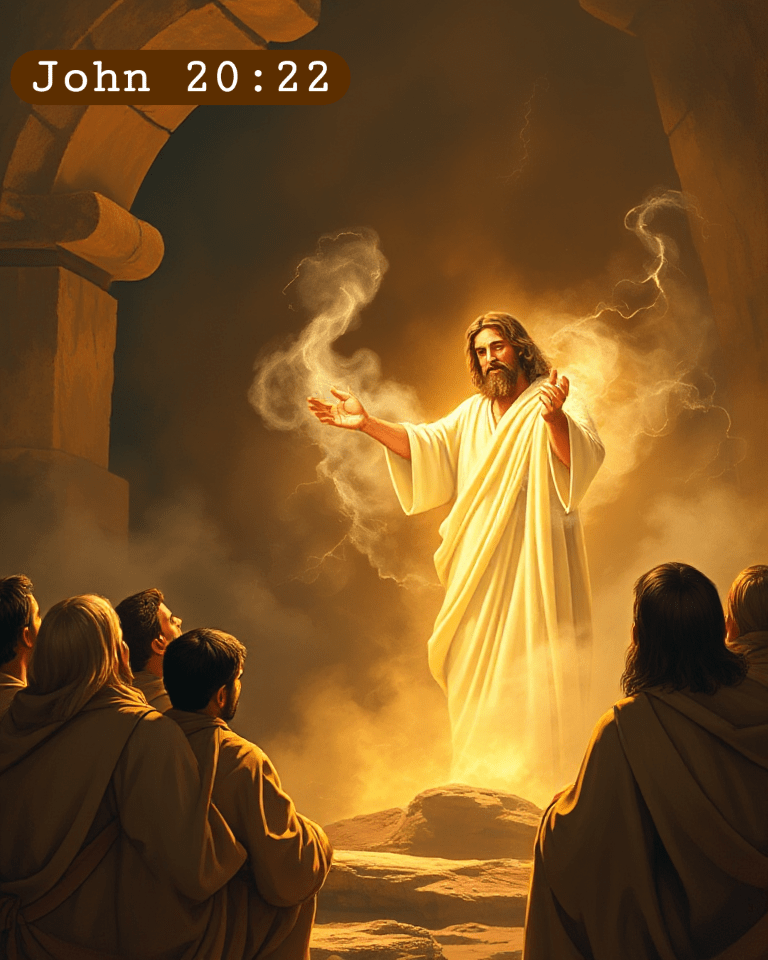
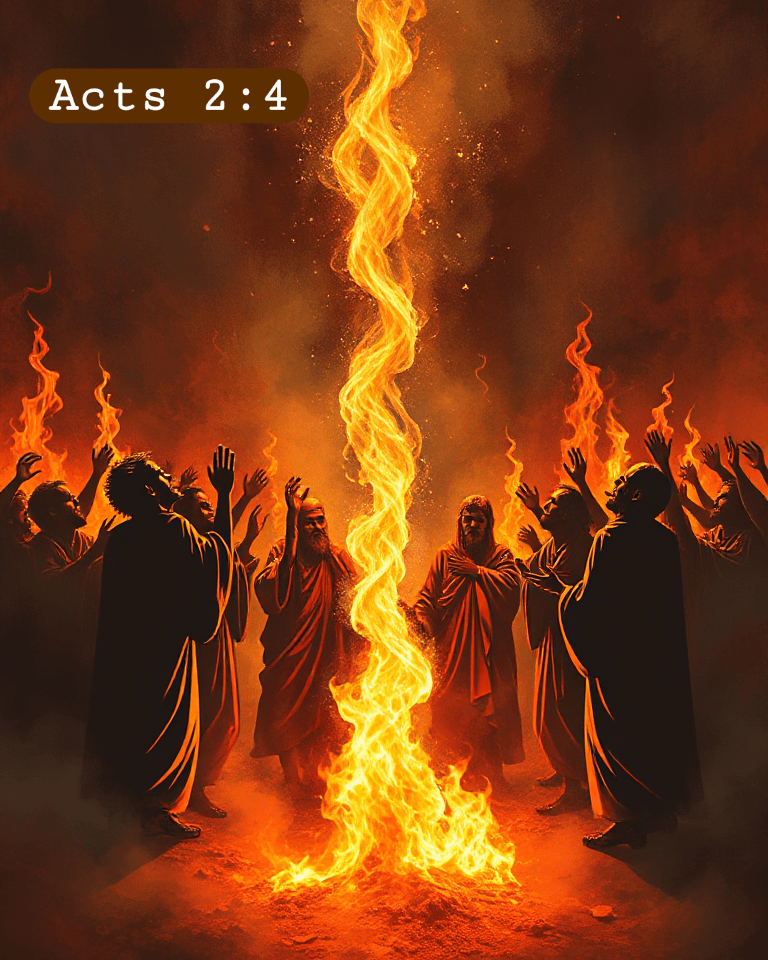
John 20:22 NIV “And with that He breathed on them and said, “Receive the Holy Spirit.” This was before Pentecost. The Holy Spirit ministers to God’s people at the moment of their declared belief in Jesus Christ. ● The disciples received the Holy Spirit by the breath of Jesus. They were at once indwelt and regenerated by the Holy Spirit. Likewise, by God’s living Word, His breath, as we come to BELIEVE, we too receive the gift of FAITH, and are INDWELT and regenerated into a whole NEW creation. ● The outpouring of the Holy Spirit in Acts 2:4 was experienced by the disciples AFTER they received the Holy Spirit. Their baptism in the Spirit at Pentecost was, therefore, a 2nd distinct work of the Spirit in them. All Christians receive the Holy Spirit at the moment of belief and are regenerated. John 20:22 (Wuest Greek Translator) ‘He breathed on them and says to them, Receive at once the Holy Spirit.” This importation of the Holy Spirit was not symbolic prophecy of the Holy Spirit at Pentecost. The imperative “receive” denotes reception at once. This was a historical reality as John recorded it.
John 21:16 Jesus asked, “Do you love Me?” Peter replied, “Yes, Lord, you know that I love you.” Jesus said, “Take care of my sheep.” The Word of God says. “My sheep know My voice.” John 10:27


 Living Abroad
Pingback: God said… | Living Abroad