We can transform our messy, wandering mind into a valid prayer. A distracted mind does NOT indicate a lack in our love for God. The Holy Spirit wants us to know His Presence regardless of how we feel. The Holy Spirit can actually use our distractions to reveal what is swirling in our souls. Our wandering thoughts are not simply random noise. They often point to unconfessed fears, deep-seated anxieties, or areas where the enemy is trying to steal our peace. We get to flip the script entirely.
There are biblical examples of real people who got completely distracted and how God used them anyway. The holy signal of our scattered, unfocused, wandering mind causes us to get real in our prayer time. When our mind wanders during prayer, we wusrky don’t beat ourselves up. We choose to just reset. Peay: “Heavenly Father, hallowed be the name of Jesus, but I am distracted. I am tired, but I am here and trsuting You know my heart. I love you and ask that Your peace stills my mind. AMEN That is a prayer that pleases our Father.


Why does our mind wander? Think about a very common everyday scenario. Imagine sitting down at a coffee shop with a friend and you are looking them right in the eye, as they chat about a recent event. You cannot remember what they said because you were fully distracted. Your thoughts were miles away as you sat composed but unaware. You thought about the weird noise your car made as your friend poured out their heart. Physically present, but mentally checked out. You did not intend to ignore them, as your brain is focused on many things. Like Martha, we do this to God every day. We sit down to pray, but we are so overloaded with the pressures of life that our brains just start processing the backlog. our wandering mind is not an indicator of your lack of love for God. It is an indicator of what is weighing on your heart. Look at the story of Martha and Mary in Luke chapter 10. Jesus came to their house. Mary sat at his feet, completely captivated, hanging on his every word. But Martha? The Bible says in Luke 10.40 that Martha was distracted by all the preparations that had to be made. The original Greek word for distracted here is perispao. It literally means to be dragged around or pulled apart in different directions.
Martha was running around the kitchen, sweating, trying to make the perfect meal. She gets so frustrated that she actually interrupts Jesus and says, Lord, don’t you care that my sister has left me to do the work by myself? Tell her to help me. Look at how Jesus responds. He doesn’t scold her for being a bad host. He doesn’t say, Martha, you are a terrible Christian. He looks at her with compassion and says in Luke 10.41,
Martha, Martha, you are worried and upset about many things. Jesus identified the signal. Martha’s distraction was a symptom of her anxiety. She was so worried about the details that she missed the presence of God in her living room. Psalm 94.19 says, When anxiety was great within me, your consolation brought me joy.
Notice the psalmist doesn’t say, When I perfectly focused on God, everything was great. He says, when my anxiety was great. The wandering mind is often just an anxious mind looking for a place to land. When you are praying about your finances and your mind suddenly drifts to a memory of a past failure, that is a signal. The Holy Spirit is showing you that you are carrying shame about that failure. When you are praying for your family and your mind drifts to a worst case scenario, that is a signal that you are not actually trusting God with their future. Every distraction is a doorway. The enemy wants you to close the door and walk away in shame. But God wants you to walk through that door with him so he can heal the root of that anxiety. You don’t have to fight your mind. You just have to learn how to redirect it. So, what do we do with this? If our wandering minds are just signals pointing to deeper issues, how do we actually fix it? How do we stop being dragged around by our thoughts and actually have a conversation with God? It starts with the very first habit. And this first habit is going to sound counterintuitive. It is the exact opposite of what you have been taught to do when your mind wanders.
Habit number one, the drop the anchor method.
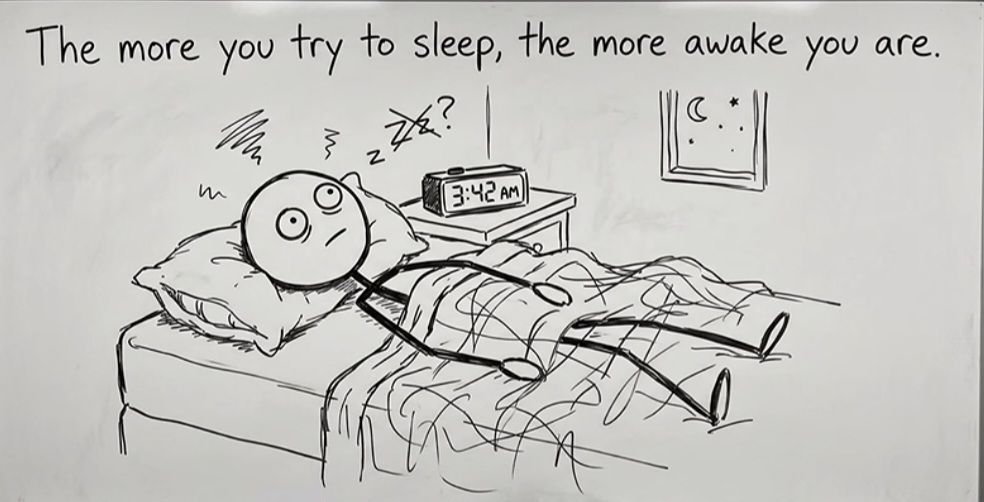
Stop fighting the thought. The first habit is completely counterintuitive. It is the exact opposite of what you have been taught to do. When your mind wanders during prayer, the natural instinct is to get angry, grit your teeth, and try to force your brain back into focus. You try to wrestle the thought into submission. And what happens? The harder you try to not think about something, the more you think about it. It is like trying to hold a beach ball underwater. The moment you relax, it shoots right back up and hits you in the face. So, what is the drop the anchor method? It is acknowledging the thought, writing it down, and releasing it. Think about the everyday reality of this. You are trying to fall asleep at 2 a.m., but your brain is a runaway train. You are worried about the presentation you have to give tomorrow. You are worried about the mechanics bill. And you are worried about your teenager who hasn’t texted you back. You toss and turn. The more you try to sleep, the more awake you are. But what does every sleep expert tell you to do? If you can’t sleep, get up, write down the things you are stressed about on a piece of paper, and then leave the paper on the nightstand. You are telling your brain, I have recorded this. We will deal with it tomorrow. We can rest now. You need to do the exact same thing with God during prayer. If you are trying to pray, and suddenly you remember you have to pay the water bill, do not get mad at yourself. Just say, Father, I am anxious about this bill. I am handing it over to you right now. I trust you to provide. Holy Spirit, help me keep my focus on you. You drop the anchor. You name the thought, you give it to God, and you release it. Look at the story of Hannah in 1 Samuel 1.
Hannah was a woman who was completely heartbroken. She was barren, and her husband’s other wife, Penina, mocked her relentlessly for it.
Hannah went to the temple to pray. The Bible says she was weeping bitterly. She was so consumed with grief and distraction that she wasn’t even speaking out loud. Her lips were moving, but no sound was coming out. The priest, Eli, actually saw her and thought she was drunk. But look at what Hannah did. She didn’t try to compose herself. She didn’t try to offer a perfect, well-worded religious prayer. She poured out her deep anguish to the Lord. She laid the distraction, her grief, right at the feet of God. And in 1 Samuel 1.18, after she poured it all out, the Bible says, Then she went her way and ate something, and her face was no longer downcast. She dropped the anchor of her anxiety, and God gave her peace. 1 Peter 5.7 says, Cast all your anxiety on him, because he cares for you. If a thought is pulling you away from prayer, that thought is an anchor. Stop trying to swim against it. Pick it up, hand it to Jesus, and cast it on his shoulders. But what happens when the distraction isn’t just a random thought about a bill or a grocery list? What happens when the distraction is a deep, painful memory? What happens when the enemy plants a thought in your mind that is filled with shame or fear? You can’t just write that down and ignore it. You have to fight back. And that brings us to the second habit.
Habit number two. The pivot prayer.
Turn the distraction into a conversation. The second habit is what I call the pivot prayer. This is where you take the distraction, and instead of letting it kill your prayer time, you use it as fuel for your prayer time. When we get distracted by a situation, our instinct is to stop praying altogether. We feel like the prayer is ruined. But the pivot prayer says,
Wait a minute. If this thing is distracting me this much, it must be the most important thing I need to be praying about right now. Think about the everyday reality of this.
Imagine you are sitting down to pray for your church, your pastor, and the nations of the world. But you can’t focus because your stomach is in knots about a massive argument you had with your best friend yesterday. You feel the guilt rising. You think, I’m a terrible person. I should be praying for the world, but all I can think about is my own drama.
Instead of fighting it, pivot. Stop praying for the nations for a moment. Say, God, I am completely distracted by my relationship with my friend. I am hurt. I am angry. I don’t know how to fix this. Lord, I lift my friend up to you right now. I pray for peace. I pray for healing. Show me how to forgive.
Look at the story of Jesus and the woman at the well in John chapter 4. Jesus meets a Samaritan woman at a well.
She is completely distracted by the physical task of drawing water. Her mind is consumed with her past. She has had five husbands, and she is living with a man who isn’t her husband. She is consumed with a cultural divide between Jews and Samaritans. Jesus didn’t say, Stop thinking about water. Stop thinking about your past. Let’s talk about theology. No! Jesus took her distraction, the water, and pivoted it. He said in John 4.14, Whoever drinks the water I give them will never thirst. Indeed, the water I give them will become in them a spring of water welling up to eternal life. He took the very thing that was on her mind and used it to reveal his grace.
Philippians 4.6 says, Do not be anxious about anything, but in every situation, by prayer and petition, with thanksgiving, present your requests to God. Notice it says, in every situation. If your mind is wandering to your finances, pivot and pray for your finances. If your mind is wandering to a painful memory, pivot and pray for healing from that memory. If you are distracted by a person, pivot and pray a blessing over that person. Every distraction is a divine invitation to pray specifically.
Now, you have dropped the anchor and you have pivoted the prayer. But what happens when your mind still wanders back to the same thing five minutes later? What happens when the enemy is relentless and the distractions keep coming like waves? How do you stay focused when the battle is raging? That brings us to the ultimate weapon.
The third habit is what I call the sword method. When your mind is wandering and the distractions aren’t just random thoughts about what to eat for dinner, but actual lies from the enemy, thoughts of fear, shame, or unworthiness, you cannot just passively pivot. You have to fight back. Think about the everyday reality of this. You are trying to pray and suddenly a voice whispers in your mind, God isn’t listening to you. You aren’t holy enough. You messed up too badly yesterday.
He is disappointed in you. And what do we do? We agree with it. We start praying out of a place of guilt. Our minds spiral into a pit of self-condemnation. But the Bible tells us in Ephesians 6.17 to take up the sword of the spirit, which is the word of God. When a distracting, condemning thought enters your mind, you don’t argue with it. You don’t entertain it. You take the sword of the spirit and you use scripture to slice it in half. Look at the ultimate example of this in Matthew chapter 4. Jesus had just been baptized. He was led into the wilderness to fast for 40 days and 40 nights. He was physically depleted, hungry, and alone. And the devil came to tempt him. The enemy threw distractions at Jesus, twisting scripture, offering him power, and trying to derail his mission. Did Jesus sit there and think, Wow, that’s a really tempting thought. Let me analyze why I feel this way.
No. Every single time the devil spoke, Jesus responded with the word of God. He said, It is written, Man shall not live on bread alone. He said, It is written, Do not put the Lord your God to the test. He said, Away from me, Satan. For it is written,
Worship the Lord your God and serve him only.
Jesus fought the distraction with the sword. When your mind wanders into a place of fear or shame during prayer, you need to have scripture ready. You say, No. It is written, There is therefore now no condemnation for those who are in Christ Jesus. Romans 8.1 You say, It is written, God has not given me a spirit of fear, but of power, love, and a sound mind. 2 Timothy 1.7
Psalm 119.11 says, I have hidden your word in my heart that I might not sin against you. The word of God is your defense. When your mind wanders, speak the truth of God out loud.
The enemy hates the word of God. The moment you speak it, the atmosphere shifts, and your focus is restored to the one who speaks truth.
Now, we have dropped the anchor, pivoted the prayer, and used the sword of the spirit. But here is the reality. Sometimes, you are just exhausted. Sometimes, you are so physically drained from the weight of life that your body is failing you. You are trying to pray, but you literally cannot keep your eyes open. What do you do when your own body is fighting against your spirit? That brings us to the fourth habit. Habit number four. The watch and pray habit. Changing your physical posture. The fourth habit is incredibly practical. It is the watch and pray habit.
Sometimes, the reason your mind wanders is that your body is completely exhausted. We are physical beings. We cannot separate our spiritual lives from our physical reality. If you are physically drained, your spiritual focus will suffer. Think about the everyday reality of this. You wake up early to pray, but you are sitting on the edge of your bed. The bed is warm, the room is quiet, and suddenly, your eyes are heavy. You start praying, and the next thing you know, you are waking up an hour later, drooling on your pillow. You feel terrible. You think, I fell asleep on God. But look at the story of Jesus in the Garden of Gethsemane in Matthew chapter 26.
Jesus was under immense spiritual pressure. He was sweating drops of blood. He told his disciples, Peter, James, and John, to sit and watch and pray while he went a little further to pray alone. When Jesus came back, what did he find? He found the disciples fast asleep. He woke Peter and said, Couldn’t you men keep watch with me for one hour? And then he said something very important in Matthew 26, 41.
Watch and pray so that you will not fall into temptation. The spirit is willing, but the flesh is weak.
Jesus understood that our flesh is weak. The disciples didn’t fall asleep because they didn’t love Jesus. They fell asleep because they were physically exhausted. So, what is the solution? You have to watch and pray. You have to change your physical posture. If you are struggling to stay awake or focused, get up and walk around. Stand up while you pray. Pray out loud. Turn on the lights. Wash your face. Go for a walk and pray. 1 Corinthians 6.19 reminds us that our bodies are temples of the Holy Spirit. You have to steward your physical energy so that your spirit can be fully engaged. Don’t just passively sit there and let the enemy lull you to sleep. Change your environment. Change your posture. Engage your body in the act of prayer.
So, we have these amazing habits. We can drop the anchor, pivot the prayer, use the sword of the word, and change our posture. But I have to address the elephant in the room. Because even after doing all of this, sometimes your mind still wanders. Sometimes you still feel like you failed. What is God’s grace for the messy, distracted prayers? I am going to show you the ultimate truth about what God actually thinks of your wandering mind. Habit number five. The grace reset. Stop performing and just be present. The fifth habit is the ultimate fix for the wandering mind. It is what I call the grace reset. We have talked about dropping anchors, pivoting prayers, using the sword of the word, and changing our physical posture. But here is the deepest truth.
Sometimes, even after doing all of that, you are still going to get distracted.
And when that happens, the enemy is going to try to flood you with shame. He is going to tell you that your prayer was a failure because you didn’t achieve perfect, zen-like focus. The grace reset is the moment you realize that prayer is not a performance. You do not have to impress God with your ability to concentrate. God is not grading your quiet time like a school exam. Think about the everyday reality of this. Imagine you are planning a special dinner for your spouse or a very close friend. You spend all day cooking. The house smells amazing. You set the table beautifully. But right in the middle of the meal, the power goes out. The food gets cold. The conversation gets interrupted. And nothing goes according to plan. Now, what is the healthy response? Do you look at your spouse and say, Well, this night is completely ruined. I am a total failure? No! You laugh. You light a candle. You eat cold food. Because the whole point of the dinner wasn’t the perfect atmosphere. The whole point was being together. When you sit down to pray and your mind wanders, the perfect atmosphere is ruined. You feel like you failed. But God is sitting across the table from you, looking at you with love and saying, I don’t care about the perfect words. I just want to be with you. Look at the ultimate story of this in Luke chapter 15, the parable of the prodigal son. The son takes his father’s inheritance, runs away, and wastes every single penny on wild living. He hits rock bottom. He is feeding pigs, starving, and completely humiliated. He decides to go home. But look at his mindset. He is terrified of his father’s reaction. He is so ashamed of his failure that he doesn’t even want to be a son anymore. He rehearses a speech. Father, I have sinned against heaven and against you. I am no longer worthy to be called your son. Make me like one of your hired servants.
He is preparing to perform. He is preparing to be a slave just to get back into the house. He thinks his focus and his worth are completely gone. But what does the father do? The Bible says in Luke 15, 20,
But while he was still a long way off, his father saw him and was filled with compassion for him. He ran to his son, threw his arms around him, and kissed him. The son tries to start his rehearsed speech, but the father interrupts him and says, Quick, bring the best robe and put it on him. Put a ring on his finger and sandals on his feet. The father didn’t care about the son’s wandering, messy life. He didn’t care about the perfect speech. He just wanted his boy home. Matthew 11, 28 says, Come to me, all you who are weary and burdened, and I will give you rest.