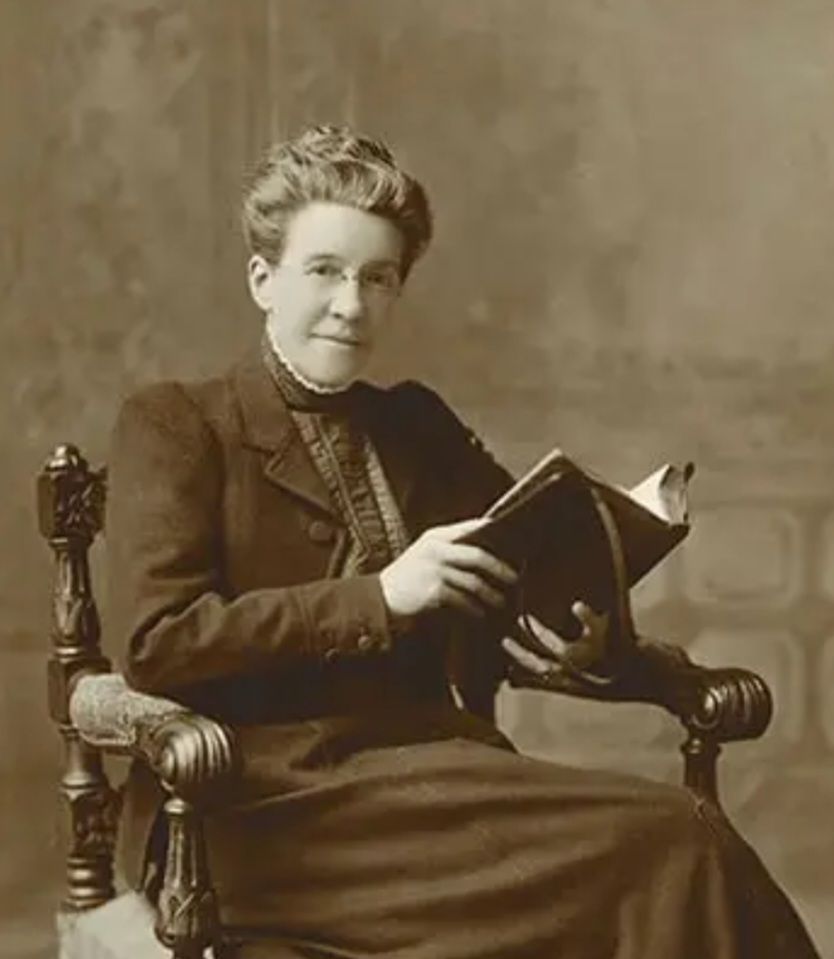
Jesse did not seek power or influence. She sought inner crucifixion. She did not seek spiritual thrills, she sought truth and purity. Jesse did not seek manifestations, she sought obedience to Christ alone. And because she sought truth, God gave her sight into deception, into emotionalism, into spiritual warfare, into the traps of hidden strategies. Such spiritual insight cost her everything. Her health was fragile. She lost strength, the comfortable life, her reputation, her friendships, her place in certain circles. Jesse lost her peace at times, but never her obedience. And because she obeyed His call to pick up her cross, her voice still speaks in 2025. Yield your self-life to Christ, take up your cross and live the crucified life. “The righteous will live by faith.” Romans 1:17
Jesse is a picture of a soul thirsting for truth. Doctors had warned that she was dying. But alone, in the stillness of her Welsh bedroom, the Spirit whispered, ‘Yield’. She felt the word vibrate each nerve in her weak frame. Yield? Jesse could barely move. “Yield, let Me work.” Jesse realized this was the turning point of her life, not the moment she would die, but the moment she would finally live. She said nothing aloud, but her heart broke, and as she surrendered all, heaven moved. Strength poured through her like a river of light. She took her first deep breath in months. Later she wrote, “Calvary is the key. All victory flows from the cross.”
She simply breathed as if God himself was filling her lungs. Jesse did not know that her surrender would carry her into controversies, global revivals, fierce spiritual battles, and the writing of one of the most influential and debated books on spiritual warfare in Christian history. Her story did not begin with strength. It began with fragility. Jesse was born a Welsh town filled with smoke, coal dust, and quiet religion. She was a sensitive child, bright eyes, quick mind, easily moved by the smallest whisper of conscience. What she saw in church and what she read in scripture troubled her. “Is this all?” Everyone seemed content with outward religion, no transformation, no deep repentance, no burning hunger for God. Jesse felt different, restless. A quiet ache lived beneath her ribs, but she pushed it down. She married William Penn Lewis, a calm and steady man who adored her. They settled into Victorian respectability, china dishes, polite visitors, carefully ironed curtains, a predictable rhythm. Yet under the surface, her spirit yearned. She was plagued by spiritual dissatisfaction, an emptiness words couldn’t express. She longed for holiness, but couldn’t grasp it. She longed for surrender, but feared what it might cost. She longed for God, but felt too weak to reach him. Her weakness was not just spiritual. Illness crept into her lungs and she lost weight, strength, and vitality. Doctors raised eyebrows, neighbors whispered. Jesse returned again to her bed, exhausted.

The day arrived when she could no longer walk. She didn’t know that God sometimes allows the body to collapse so the soul can finally stand. While lying on that bed, too weak to read, too tired to pray, she felt an inner breaking, a collapse of pride she had never recognized. Jesse had tried to sanctify herself through effort, and now she could no longer make effort at all. Her weakness was the doorway to His strength. She reached the end of herself, and God stepped in. The surrender that night was not dramatic, no thunder, no shaking walls, no visions of angels, just a heart that said, “Lord, I cannot, but you can.” She later described it as passing from self-effort to the cross. Dying to her own striving, rising into Christ’s strength.
Her recovery startled everyone. With every breath, a new fire kindled in her. This was not the gentle Jesse who once tried to be proper, polite, and quiet. God awakened her with boldness. She began to testify of her healing. Women gathered in her living room, drawn by her quiet authority. Jesse taught them the way of the cross, not the sentimental way, not the theoretical way, but the way she learned on the edge of death. You must die to live. You must yield to overcome. You must lose yourself to be found in Christ. Her words pierced hearts. Her prayer gatherings expanded. Revival was stirring in Wales and a wind was about to blow across the nation, one that would sweep Jesse into scenes she never imagined. Crowds gathering in chapels at midnight, young miners crying out to God, voices rising in hymns that seemed to touch heaven. Jesse watched it spread like fire, leaping across dry fields, unstoppable, unpredictable, burning through every barrier of denomination and tradition. She saw young people trembling as they surrendered everything. She saw seasoned ministers broken in repentance. She saw hardened hearts softened until tears flowed like rain. During the Welsh revival, Jesse obeyed her calling. It was not to stir emotion, but to guard truth. She observed that revival, if unguarded, could drift into extremes, hysteria, emotional imbalance, deception.
She began writing pamphlets explaining the work of the cross, the need for discernment, and the danger of spiritual counterfeit. Her writings spread like wildfire. People were stunned by the depth of her insight. How could a gentle woman see so clearly into the invisible battles raging beneath revival? Ministers sought her counsel. Missionaries including Watchman Nee relied on her writings. Her words influenced India, China, Scandinavia, America. But the more influence she gained, the more controversy followed. But Jesse pressed on. Her deepest battles were not against critics, but against the unseen powers she wrote about. Nights of wrestling prayer, hours searching scripture, moments when she wondered if she had misunderstood God entirely.
She wrote “War on the Saints.” Which would nearly destroy everything. The book exposed the mechanics of spiritual deception with surgical precision. She described how believers could be deceived not only by sin, but by false supernatural experiences. Satan disguises himself as an angel of light, and how emotional impulses could mimic the voice of the spirit, how untested revelations could lead to bondage. Her insights were bold, controversial, uncomfortable, and the Christian world reacted. Some embraced the book as a revelation. Others rejected it as extreme. The debates were fierce and church doors closed to her.
Invitations were withdrawn.
But letters kept arriving from missionaries saying they had been rescued from error, saved from confusion, delivered from spiritual oppression. Jesse realized she was not fighting for approval. She was fighting for the truth. The cost was heavy. She surrendered again, yielded again, returned to the cross again. Each time she did, her influence grew not through popularity, but through unmistakable spiritual authority.

Jesse founded a magazine that reached every continent. The Overcomer traveled to England, Scotland, India, Russia, teaching the deeper life. The believer’s union with Christ, begins with crucifixion and tge resurrection. Jesse carried the same weakness she had since her early years, the same frail lungs, the physical limitations. Her body remained fragile, but her spirit remained unbreakable. Her writings later made the next generation feel known, and seen in their confusion, their wrestlings, their emotional chaos, their spiritual hunger. One generation of missionaries in Asia adopted her teachings as part of their training curriculum. A group of underground believers in Eastern Europe hand-copied her writings, passing them like scrolls of fire. A revival school in South America taught her warnings about deception as core doctrine. And through it all, her central message remained unchanged.
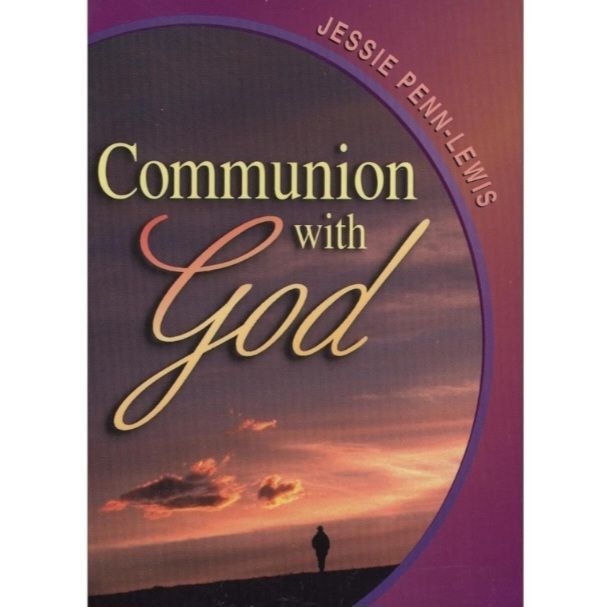
“Calvary is not a shallow emotion, it is not a sensational experience, it is not spiritual theatrics, not self-driven holiness, not willpower, not zeal without wisdom, but Calvary, the place where the self-life dies and the Christ life begins, the place where darkness is defeated and discernment is born, the place where revival is purified and truth stands alone. It was the place where Jesse herself had been broken, remade, and sent into battle. The cross is not an event to be admired. It is a reality to be entered, a death to die, a life to live. The cross transforms everything as it exposes deception. It breaks emotional captivity. It destroys pride. It brings the believer into union with Christ. It grants authority over darkness. It produces discernment that cannot be explained, only lived. The Jesse Penn Lewis legacy becomes almost prophetic. Decades before modern churches struggled with hyper-emotionalism, she warned about it. Decades before false supernatural experiences misled multitudes, she described them. Decades before spiritual influencers blended psychology, mysticism, and Christianity, she discerned the danger. Decades before global revivals fell into imbalance and excess, she explained how it happens. And decades before spiritual warfare became a trend, she wrote the manual. But Jesse never wanted her writings to create fear, nor to create suspicion, nor to create pride. Her longing was simple. That believers would live crucified and therefore free from deception, from emotional bondage, from spiritual confusion. Free from self-will, and from counterfeit experiences. Free from striving, free from the flesh, free to live wholly in Christ. Because a crucified believer is an untouchable believer. A crucified believer cannot be manipulated, seduced, or deceived. Jesse Penn Lewis left behind truth. Not a movement, not a denomination, not a theological system, but a call, a cry, a warning, a fire, a cross. Her words pass from generation to generation like a whisper carried by the spirit. “Yield and live.” Her writings stir souls to go deeper, to confront the Deceiver. A longing for inner purity, a desire for authentic holiness, a yearning for union with Christ. Her message is not easy, but it is liberating. Her words are not comfortable, but transforming, not popular, but eternal. Jesse Penn Lewis got victory over the spiritual battle. Her ministry was a sword. Her calling was a furnace. Her legacy is a torch. And now, in our generation, that torch is being passed again. The world is louder now than it was in Jesse’s day. More noise, more emotion, more spectacle, more confusion, more spiritual claims, more revelations, more counterfeit light wrapped in Christian language. In the noise, her voice rises again, not to withdraw, not to hide, not to fear, but to discern, to return to the cross, to surrender the self-life, to die to emotional impulses mistaken for the spirit, to yield to Christ in a way that burns away every illusion. The enemy is no longer subtle. He is sophisticated. He cloaks himself in Christian language, emotion, music, and experiences. But there is one thing he can never imitate, the cross. He imitates light, joy, and revelation. He imitates supernatural moments. But he cannot imitate the crucifixion, because he cannot imitate death to self. He cannot imitate a believer who has yielded their will entirely to God. He cannot imitate humility born at Calvary, brokenness born at Calvary, holiness born at Calvary, discernment born at Calvary. Return to the cross. Only there is the soul made safe. Her message is not dramatic. It is not glamorous. It does not soothe the ego. It exposes the ego. It dismantles it. It crucifies pride. Through that death, freedom flows.
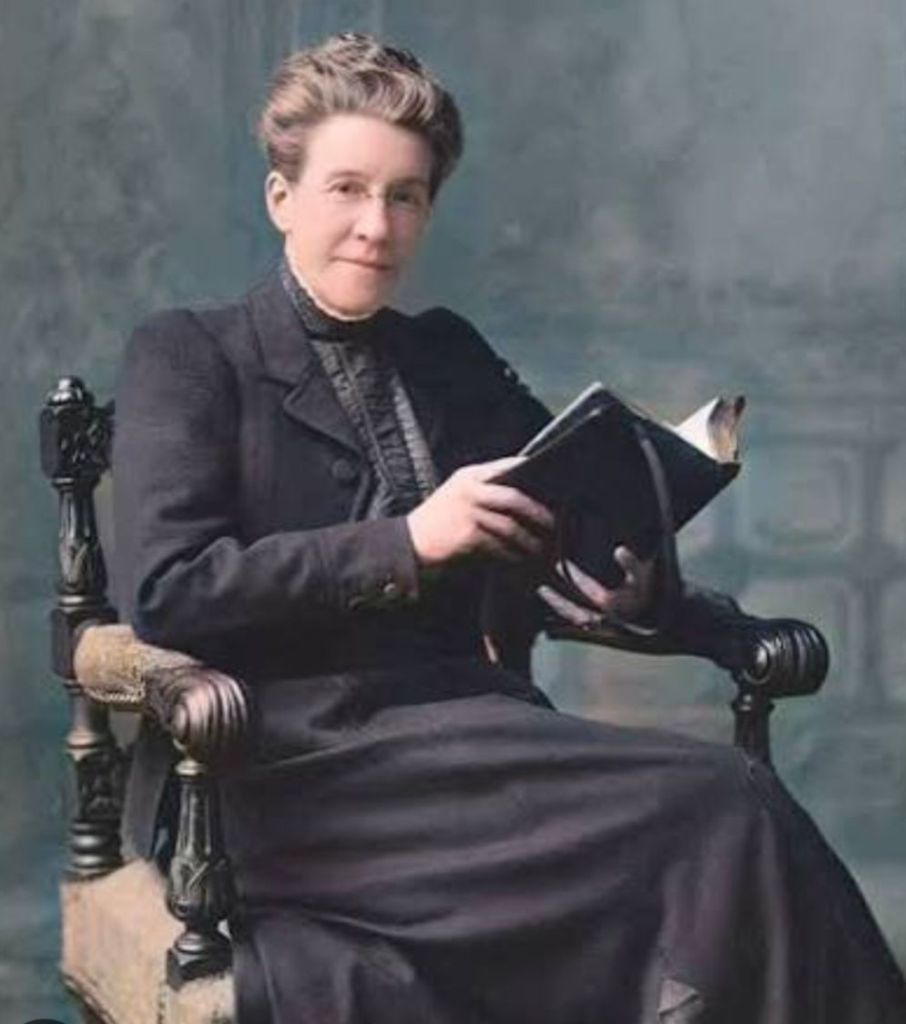
Where are you leaning on emotion instead of truth?Where has spiritual experience replaced surrender? Where has self-will disguised itself as spirituality? Where have you mistaken activity for obedience? Her life confronts gently. The greatest message Jesse ever preached was not written in a book. It was written in her suffering, in her surrender, in her weakness, in her courage, in her dying daily, in her yielding to the very end. Her final echo reaches across time, across nations, across hearts. We overcome by yielding. We discern by dying. We live joyfully because of the cross and we are blessed in our service to our Lord Jesus.


 Living Abroad
Pingback: Walk Humbly | Living Abroad