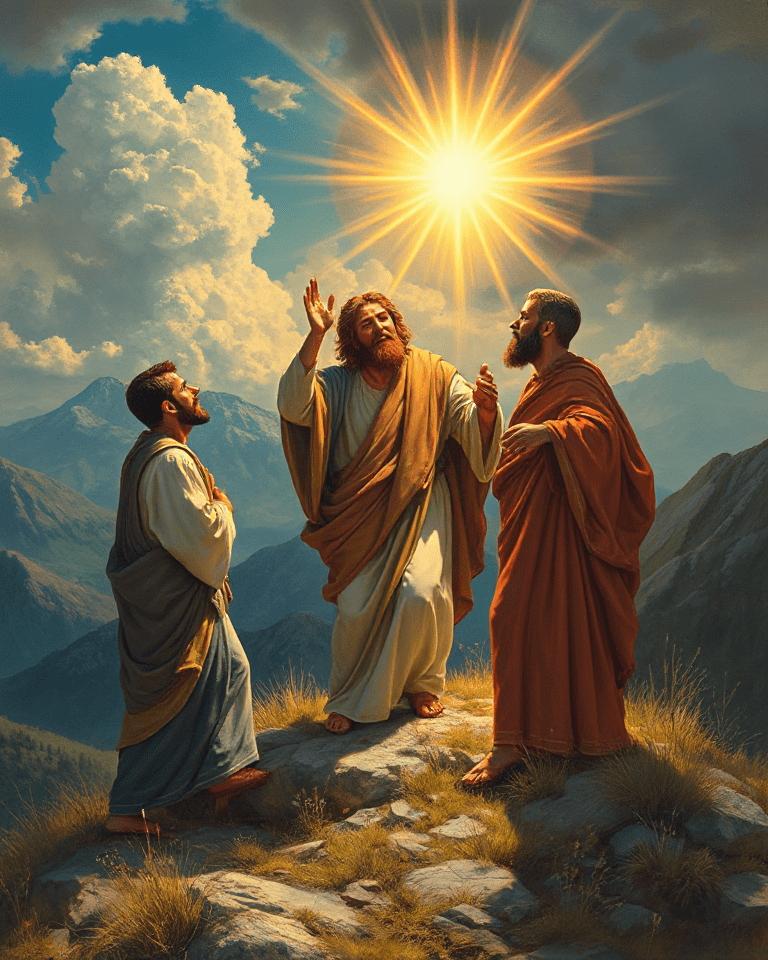
The second time the voice of God is recorded in Scripture was during the scene of the intentional transfiguration. God said “HEAR HIM.” To understand the significance of what Peter, John, and James saw, is to learn what Jesus fully accomplished. The Transfiguration reveals Jesus as the fulfillment of the law and prophets. Peter, James, and John were given a preview of eternity so they could stand firm in time. Once you’ve seen the glory of the King, no trial, doubt, or persecution can shake what you know to be true. The power of the holy transfiguration wasn’t just a flash of glory from the past, it was a window into the future. This moment wasn’t merely historical, it was prophetic. It was Jesus showing His disciples, and us, a glimpse of what’s to come, a preview of His resurrection and 2nd coming. Moses climbed Mount Sinai to meet with God. Jesus climbs the Mount of Transfiguration, bringing 3 witnesses with Him. On Sinai, a cloud of glory descended upon the mountain. Here, a bright cloud envelops the scene, symbolizing God’s manifest presence. On Sinai, the voice of God thundered from within the cloud, declaring His covenant. On the mountain with Jesus, God’s voice again speaks, declaring His son and issuing a new command. “HEAR HIM.” After his encounter on Sinai, Moses’ face shone with a fading glory. On this mount, Jesus’ entire being glows, not from reflected glory, but from His own divine, eternal nature, a light that does not die or fade. What the man Moses experienced in part, JESUS reveals in FULLNESS. Law was given on Sinai, on this mount GRACE is seen. Sinai struck terror, this mount invited understanding. At Sinai, the people were terrified. They stood at a distance, afraid to even approach the mountain. Only Moses was allowed to go up. Exodus 20:19. “You speak with us, and we will hear, but let not God speak with us, lest we die.” On the Mount of Transfiguration, everything is different. There was a mountain, a cloud, a voice, but this time, instead of pushing people away, God draws us closer. Instead of a holy fear that demands distance, there was a RADIANT GLORY that INVITES relationship. Jesus is the bridge between heaven and earth. HE is our Mediator who intercedes for us. He ascended up on our behalf, and HE brings us with HIM. Hebrews 12:18 “You have not come to a mountain that may be touched and burned with fire, but you have come to Mount Zion, to Jesus, the mediator of the new covenant.” AMEN

The contrast is stunning. At Sinai, God gave the law through a servant. On the Mount of Transfiguration, God gives us His Son, the fulfillment of that law. Jesus is the greater Moses who mediates a better covenant, and HE is also the greater Elijah, the voice of the true and final prophet. What do prophets do? They don’t just predict the future, they REVEAL the WILL of GOD. They call people back to covenant, to truth, and to worship. Jesus perfectly fulfilled that role. He did not just bring a word from God, He is the word of God. John 1:14 “And the word became flesh and dwelt among us, and we beheld His glory.” The Transfiguration declares a new covenant, in which the GLORY becames our access point of grace. Jesus stood inbetween Moses and Elijah radiant in glory. He was audibly affirmed by the Father. Jesus is above the law, above the prophets. Our God said, “This is My beloved son. “HEAR HIM.” We can now approach glory with bold access. Why did Jesus bring only 3 disciples to witness this divine moment on the mountain? The answer reveals the unique calling of Peter, James, and John, the inner circle to Jesus. They were singled out for the most intimate and intense moments in Jesus’s ministry. When Jesus raised Jairus’s daughter from the dead in Mark 5, he only allowed Peter, James, and John to enter the room.
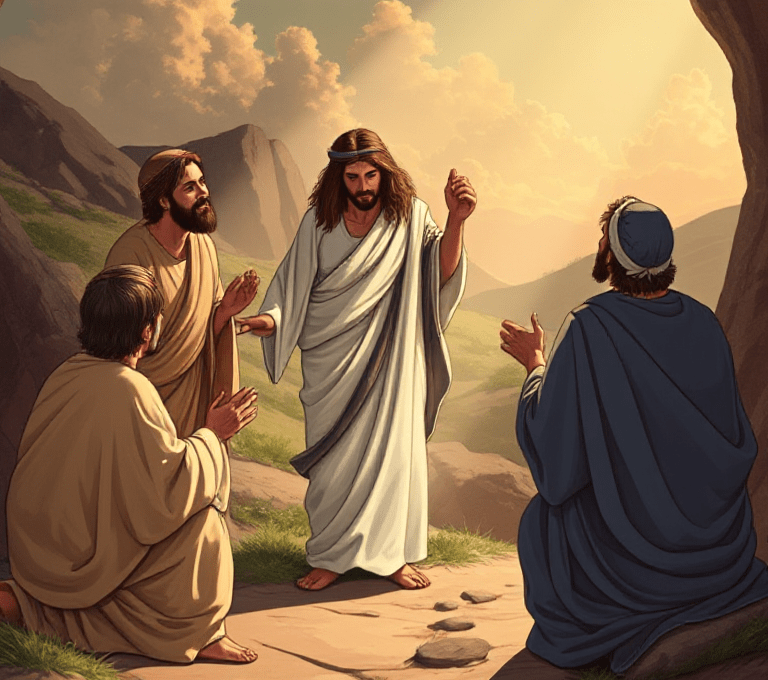
When Jesus agonized in Gethsemane, sweating drops of blood, he brought these same 3 to pray with Him. At His Transfiguration, again these 3 are invited to see His glory revealed. Jesus unveiled His divine nature to give a glimpse of His pre-incarnate glory, and let them hear the audible voice of God the Father. A privilege granted to only a few in all of scripture. Why them? Like us, these 3 will face trials, leadership roles, and persecution that require unshakeable faith. Peter, the outspoken leader, bold, passionate, often impulsive, went go on to be a pillar of the early church, Galatians 2:9. Peter preached at Pentecost, performed miracles, and eventually suffered martyrdom for his faith. 1 Peter 1:16, “For we did not follow cunningly devised fables, but were eyewitnesses of His glory.” James, the brother of John, one of the sons of thunder, a man of deep conviction. James would become the first apostle to die for the faith, executed by Herod in Acts 12:2. James didn’t live long after the resurrection, but he lived boldly. He didn’t see a teacher on that mountain, he saw the King of glory. John, the disciple whom Jesus loved, the youngest of the 12, the one who leaned on Jesus’s chest at the last supper. John would go on to write the Gospel of John, three epistles, and the book of Revelation. It was John who would see visions of heaven opened. John described the lamb upon the throne, glowing with the same brilliance he saw on the mountain that day. Make no mistake, the transfiguration planted seeds in John’s soul that would blossom decades later. Jesus didn’t choose these three at random. He chose them because they would become witnesses, not just to His suffering, but to His glory, not just to His death, but to the hope of resurrection, not just to the cross, but to the crown. This was also a public preview of something far greater. It was a foretaste of the second coming.
When Jesus returns, He won’t come in weakness, Jesus will return in power and glory. The transfiguration was a trailer, a glimpse of the day when every eye will see him as He truly is. Matthew16: 27. “For the Son of man will come in the glory of His father with His angels.”
The appearance of Moses and Elijah alongside Jesus at the transfiguration is deeper than words on a page. Moses is one of the most revered figures in all of scripture. When you say Moses, generations of Israelites would immediately think of the Exodus, the law, the covenant, and the very identity of their nation. Moses was not just a spiritual leader, he was a deliverer, a lawgiver, a mediator, a prophet, and a shepherd to a rebellious people. His life was marked by divine encounters, impossible miracles, and unwavering intercession. Exodus 33:11 Moses spoke face to face with God. Let that sink in. Out of all the prophets, priests, and patriarchs, only Moses is said to have spoken with God as a friend. He had a level of intimacy with the Almighty that no one else in the old covenant era experienced. He ascended Mount Sinai, stood in the presence of God, and came down with the very words of heaven etched in stone.
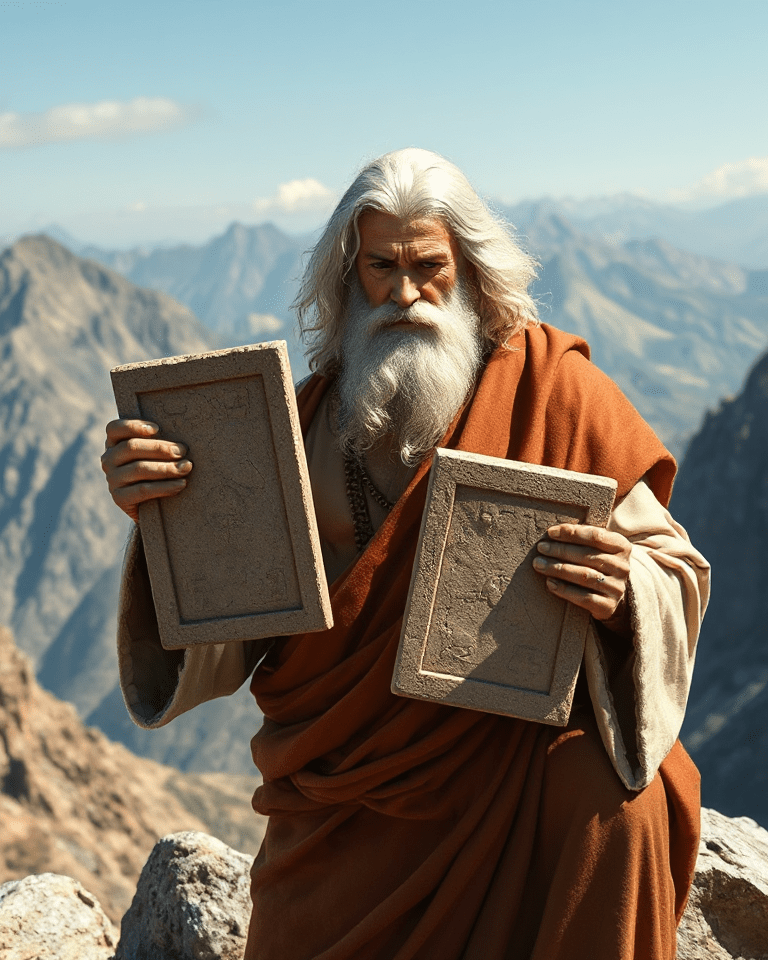
Moses is the one through whom the Torah, the first five books of the Bible was given. To this day, Jewish tradition refers to these books as the law of Moses. But the law wasn’t just a list of rules, it was a covenant framework, a blueprint for holiness, justice, worship, and national identity. Through Moses, Israel learned how to live in relationship with a holy God. Moses called down plagues by God’s command. He stretched out his hand and parted the Red Sea. He led a stubborn, often ungrateful people through the wilderness for 40 years. He was a leader and also a mediator. He carried the weight of an entire nation on his shoulders. And yet, for all his greatness, Moses himself knew that he was not the end of the story. He foretold the coming of someone greater. Deut 18:15. “The Lord your God will raise up for you a prophet like me from your midst, from your brethren, Him you shall hear.” That is a direct prophecy of the coming Messiah, Jesus. In fact, his prophecy used the very language that God the Father spoke at the transfiguration. “This is My beloved Son, HEAR HIM.” Moses appears on the mountain, not just as a ghost of the past, but as a witness to the fact that everything that was written, everything Moses taught, everything he led Israel to believe, was always pointing forward to Christ. Jesus is the One who embodies the law, who fulfills it, who replaces stone tablets with hearts of flesh. Ezekiel 36:26. Fast forward to the transfiguration mountain, and the disciples recognize Moses as they beheld the glory of Christ directly. Moses is not there to reclaim the spotlight. He’s there to pass the torch. The one Moses had prophesied about has arrived. Jesus doesn’t abolish the law, He completes it. Matthew 5:17 “Do not think that I came to destroy the law or the prophets. I did not come to destroy, but to fulfill.” So as Moses stands in glory beside Jesus, we see the law giver standing face to face with its fulfillment. Standing on the other side is Elijah, the bold prophet of fire that needed rest.
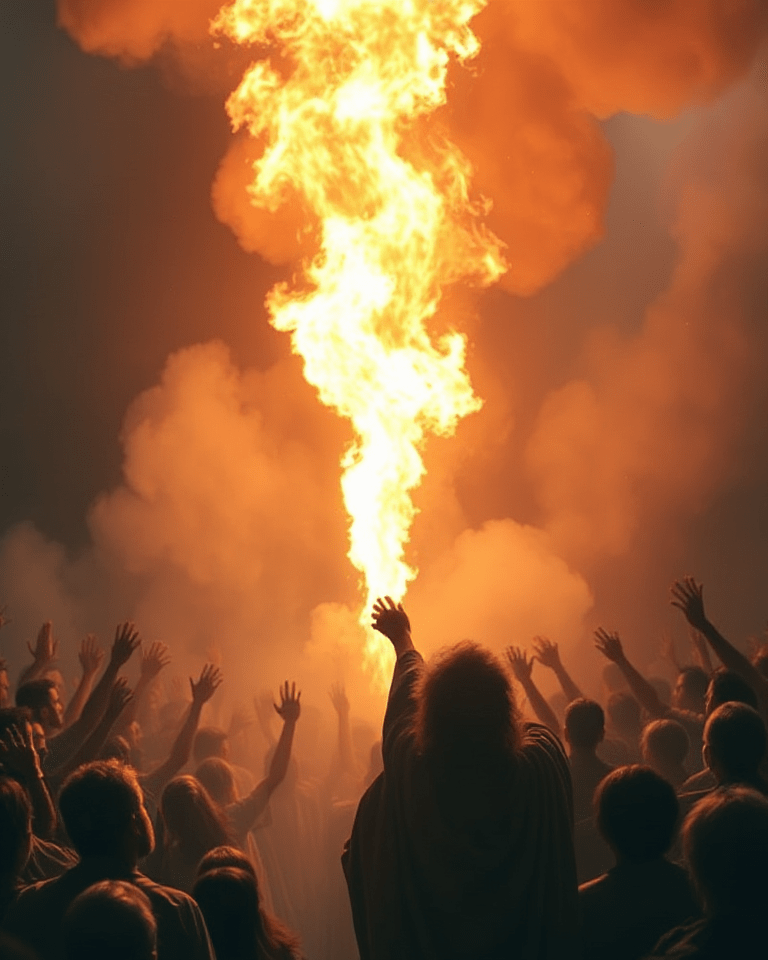
Elijah called an entire nation back from the brink of apostasy. In a time of spiritual collapse when King Ahab had led Israel into Baal worship and Queen Jezebel was killing the prophets of Yahweh, Elijah appeared like a thunderclap from heaven. A man of God, Elijah was uncompromising and unshakable. 1 Kings 18: 36-38 “Then the fire of the Lord fell and consumed the burnt sacrifice. And when all the people saw it, they fell on their faces and they said, “The Lord, He is God, the Lord, He is God.” This showdown on Mount Carmel is one of the most dramatic scenes in the Old Testament. Elijah stood alone against 450 prophets of Baal. He mocked their empty rituals. He prayed a simple prayer, and then fire fell from heaven. That moment didn’t just prove God’s power, it restored Israel’s identity. Elijah’s whole life was a call to repentance, a call to turn away from idolatry and return to God. Elijah trusted God to raise the widow’s son from the dead and multiply oil and flour during a famine. He prayed and stopped the rain for three and a half years. The most fascinating aspects of Elijah’s life is how it did not end in death. 2 Kings 2:11 “Suddenly, a chariot of fire appeared with horses of fire, and Elijah went up by a whirlwind into heaven.” Along with Enoch, he is one of only two people in the entire Bible who were taken alive into heaven. Even more compelling is the prophecy about his return. Malachi 4:5 “Behold, I will send you Elijah the prophet before the coming of the great and dreadful day of the Lord.” This verse sparked centuries of anticipation. Now, fast forward to John the Baptist. He came preaching in the wilderness and many asked, are you Elijah?
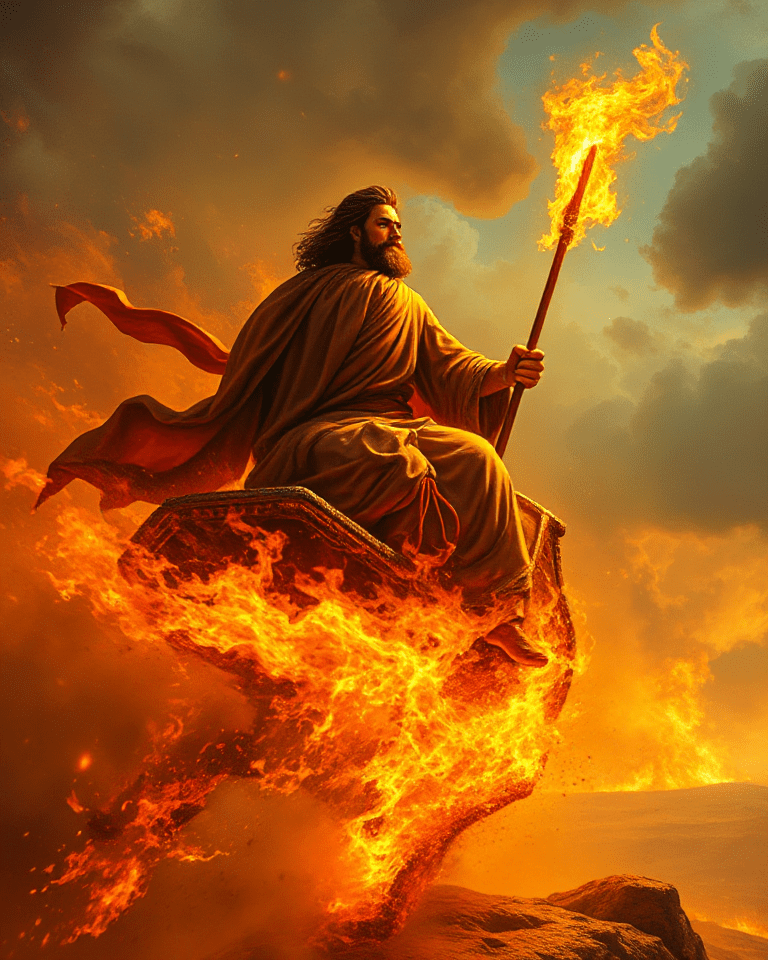
Knowing the Scriptures, the watchers knew Elijah must come first. Luke 1:17 tells us that John came in the spirit and power of Elijah. Jesus confirmed this. Matthew 11:14 “And if you are willing to receive it, he is Elijah who is to come.” John the Baptist fulfilled Elijah’s role symbolically, but now, at the Mount of Transfiguration, we see Elijah in glory standing next to Jesus. The presence of Moses and Elijah isn’t just a meeting of individuals, it’s a symbolic summit of scripture. It means that all the prophetic voices from Isaiah to Jeremiah to Malachi have now converged on this moment in time. Elijah’s appearance was a signal, a divine exclamation point that the time of fulfillment had arrived. Elijah didn’t just represent one prophet, he represented all the warnings, all the promises, all the hopes of all the prophets. Everything the prophets had declared was now embodied in Jesus. So when Peter, James and John looked up and saw Elijah standing next to Moses with Jesus in between, this wasn’t just a supernatural moment, it was a confirmation, the law and the prophets had found their fulfillment in the Son of God. Moses and Elijah were more than two great men of Israel’s past. They were more than miraculous leaders. They were symbols, living embodiments of the two major pillars of the Hebrew scriptures. Moses represent the law, Elijah represent the prophets. Together, Moses and Elijah point to Jesus as the long awaited Messiah. AMEN
The word “transfiguration” in Hebrew can be translated as “שינוי צורה” (pronounced “shinui tze’era”), which literally means “change of form.” The moment of transformation of Christ on the mountain, is known as “השתנות” or hishtanut.
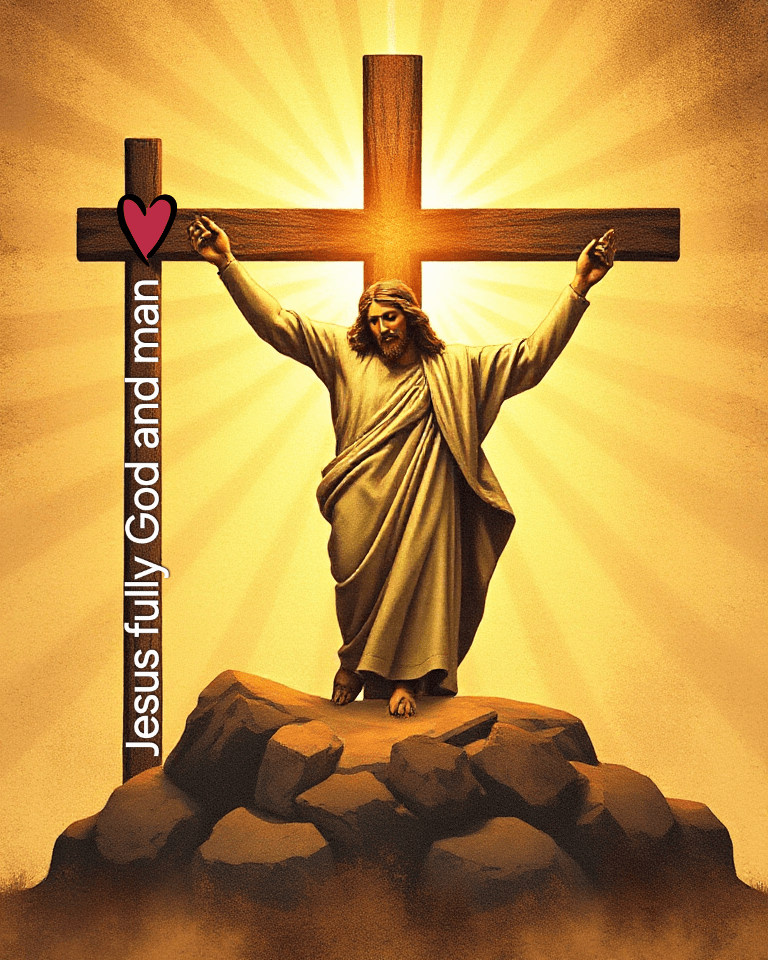
As Jesus is understood to be both fully God and fully man, how could Jesus die and experience death for 3 days? This inquiry has been explored for centuries.
☆ The Nature of Christ: According to traditional Christian doctrine, Jesus is one person with two natures: divine and human. The DIVINE NATURE is ETERNAL and CANNOT DIE, while the human nature is mortal and subject to death. When Jesus died on the cross, it was His human nature that experienced physical death.
■ Scripture says: Matthew 27:50 “And Jesus cried out again with a loud voice and yielded up His spirit.” ■ Luke 23:46 Jesus’ final words: “Father, into Your hands I commit My spirit.” ■ 1 Peter 3:18 “For Christ also suffered once for sins, the righteous for the unrighteous, to bring you to God, being put to death in the flesh but made alive in the spirit.”
☆ The references to Jesus being in the tomb for 3 days are found in passages like Matthew 12:40, where Jesus likens His time in the tomb to Jonah’s 3 days in the belly of the fish. “For just as Jonah was three days and three nights in the belly of the great fish, so will the Son of Man be three days and three nights in the heart of the earth.”
☆ Resurrection is a central tenet of Christian faith. John 20:1-18 we read about the discovery of the empty tomb. This is significant because Jesus’ resurrection demonstrates His divine natures victory over sin and death.
☆ Understanding God and Death in Christian theology, it is important to clarify that while Jesus (in His human form) died, the divine nature of God is eternal and not subject to death, but the Son of God through Jesus, fully experienced human suffering, including death, to bridge the gap between God and humanity.
In summary, it is not that God died for 3 days; rather, the incarnation of God in Jesus Christ (in His human nature) experienced death. This unique theological understanding underscores the Christian belief in the dual nature of Christ and the significance of His resurrection. Remember that God said “Let us.” Genesis 1:1-26-27 “In the beginning God created the heavens and the earth. And God said, “Let there be light,” and there was light….Then God said, “LET US make mankind in OUR IMAGE, in our LIKENESS, so that they may rule over the fish in the sea and the birds in the sky, over the livestock and all the wild animals, and over all the creatures that move along the ground.” So God created mankind in HIS own image, in the image of GOD HE created them; male and female he created them.” The truth is “All scripture is God breathed.” So we trust and obey God at His Word and He blesses our trust. His Ways are not our ways, so we do not lean on our own understanding. God said…


 Living Abroad
Pingback: A Mysterious Fog | Living Abroad