The world keeps changing the names of the treasures, but the pursuit remains the same. People still chase laughter to escape sorrow. We seek entertainment to escape silence. We desire more possessions to escape insecurity. We strive to accomplish to escape insignificance. We seek social status to escape being forgotten. Ecclesiastes demonstrates the ultimate futility of seeking lasting meaning through earthly wisdom, pleasure, and achievement alone. The Word enters our soul so that we feel the raw truth of shallow optimistic seeking. God does not suggest that we think more positively, our Father loves us enough to discipline our thoughts, so that we think with eternity in mind. What matters most? That we obey and love one another. He does NOT tell us to achieve status, but He tells to think about whatever is lovely, pure, or praiseworthy. The Holy Spirit gives the reader of Ecclesiastes the mind of a king. Solomon thought about all he had done, and he admits that even the highest human knowledge reaches a limit. We need God’s divine wisdom, but we must pause and ask for it.
We diagnose the sickness of another, but God knows each heart He created. All the days of our life were written down before we were born. Our Father knows that many hearts rely on what others think over His written Word. Why are we to reverently fear His deep knowledge of our heart’s content? His living Word silences all religious noise with the pure truth. Truly, none can please God by simply appearing good. The beauty of Ecclesiastes is that it tests the soul’s passions, and desires for more time, more security, more success, more fortune, more legacy. This book asks us to consider whether our time is best spent seeking wisdom itself or more of God’s presence and input? The answer is sobering. Wisdom is better than foolishness, but wisdom without eternal perspective still leaves the soul standing before God wanting. After wisdom Himself opens our eyes, we seek God above all else. Our nature is to seek more pleasure, joy, beauty, accomplishment, and abundance — but without Jesus we are left with a loud emptiness.
Out of pure love, our Father calls us to examine our own heart. Holy Spirit says, “Come now, I will test you with pleasure to reveal what is the desire of your heart.” Is it to know God or to be satisfied with what the world offers. Is God a passing passion or a Sunday indulgence? Am I deliberate in my desire to please God? Life is brief, labor fades, and Solomon found that wisdom increased sorrow. To demand happiness is to miss God’s purpose. At times laughter can cover the weight of our emptiness. Our faith in God can make our burden lighter, but our heart easily deceives us. We try and get it right without relying on God, just as the joy of the Lord is in our midst. Only as we surrender to the ever-present Holy Spirit, can we walk worthy.
Ecclesiastes defines it all with precise insights. God tests our daily desires. We must answer the crucial questions of death, time, and eternity. Our efforts do not gain us points with God. So we examine our emphasis on entertainment, celebration, and bodily delight. What finally silences the ache of an empty soul? We build our reputation, our families, our homes. We marvel at the gifted, the royal estates, cultivated landscapes, flowing waters, carefully designed spaces, perfect beauty, and remember that God looks at the heart, not our appearance. King Solomon was not impoverished in any visible way. He stood inside lavish abundance and concluded that without God, all life’s best is meaningless.
He amassed a fortune and surrounded himself with singers, music, and all delights of human desire. Whatever his eyes desired, he indulged. God guided his pen as he investigated his heart and wrote about his pleasures, wealth, and achievement. The Holy Spirit reveals what happens when a soul pursues all a human heart desires. The soul is fragile and humbled before our Creator. The King teaches us that every soul was created for God’s glory and that every soul matters. Wisdom exposes our lack of transparent real relationship with our living ever available God. The text moves us to reconcile our hearts to Him. Bottom line is that we must remember our first love, Jesus, and abide in the fear of God. Experiment with your awareness of His presence in your daily life. Be both a participant and observer, both servant and examiner. Solomon admits that all satisfaction on earth is but for a short season.
Our dream gardens are real. Our delight is real, but even as the joy of the Lord is real, this earth shall pass away, but not the promises of God. We consider all that our hands have done and we stand in the midst of it. Do we see what God sees? Do we agree with God? “Behold, all was vanity and a striving after wind.” Pleasure, success, and wealth were not designed to answer eternal questions. Accomplishments can decorate life, but they cannot conquer death. Our labor can fill rooms, but it cannot fill the human heart with lasting meaning. We may be admired, and feel temporary comfort, but we cannot be guaranteed eternal life without Jesus. This is why Ecclesiastes speaks so directly to every generation. Many obsess after what will turn to dust. When the noise fades, when the music ends, we will stand naked before God. The work of our hands lay before Him and we discover that abundance without eternity still leaves the soul reaching for wind.

Heavenly Father, I adore You as my faithful Father who guides, even when my way feels uncertain. I confess to the moments I let confusion, fear, or hurry pull me away from Your voice. Thank You for staying near, for planting Your Word like a SEED in my heart, and for promising to finish the work You began in me. Lord, I welcome the Holy to lead me step by step. Give me clarity, patience, and a willing spirit to grow as You lead me. In Jesus’ name, I pray, Amen Matthew 13:31-32 “The kingdom of heaven is like a mustard SEED, which a man took and planted in his field. Though it is the smallest of all SEEDS, yet when it GROWS, it is the largest of garden plants and becomes a tree, so that the birds come and perch in its branches.” ❤️ “Do not hide YOUR face from me, do not turn YOUR servant away in anger; YOU have been my HELPER. Do not reject me or forsake me, God my Savior. Though my father and mother forsake me, the Lord has received me.” I am adopted, I am His beloved child, and He is my heavenly, faithful, loving Papa! Psalm 27:8 accepted
If pleasure cannot fully satisfy the soul, perhaps wisdom has a greater advantage. The wisdom of Ecclesiastes 2 is that God’s Word causes deep thinking. We read to consider both wisdom and folly. Nothing is new under the sun. We live and reflect to compare what we have witnessed. Do the workers labor without benefit? We look at society as all people under the sun, the wise and the fool. We see people who discern wisely with good judgment and others who complain about the consequences of reckless living. One life is guided by understanding and another life is driven by blindness. Wisdom is better than folly just as light is better than darkness. The wise person walks with their eyes open. They see where they are going. Discerning danger, making decisions, avoiding traps as they understand consequences. The fool walks in darkness and they stumble through life without discernment, unable to hear truth or see the way clearly.

King Solomon knew that wisdom is better. A wise life avoids unnecessary ruin. A wise person can see what foolishness refuses to see. But in the end the wise and the fool both die. The one who saw clearly and the one who wandered blindly both come to the same end under the sun. This truth is worthy of pondering. Wisdom can guide a prudent soul through trials, but it cannot prevent death or produce eternal life. Wisdom helps us all live better, but it cannot make us everlasting. The king asks his own heart again. “If what happens to the fool will also happen to me, have I been wise at all?” The question is not an attack against wisdom but a cry of a soul facing death’s power to level all human distinctions. The wise may be honored for a time. The fool may be mocked for a time. But both are swallowed by silence. Both are forgotten. The Bible consistently honors wisdom and warns against folly, but the soul that seeks a fruitful life under the sun asks God for help. God is faithful to deliver us from evil, as His Word packs a punch.
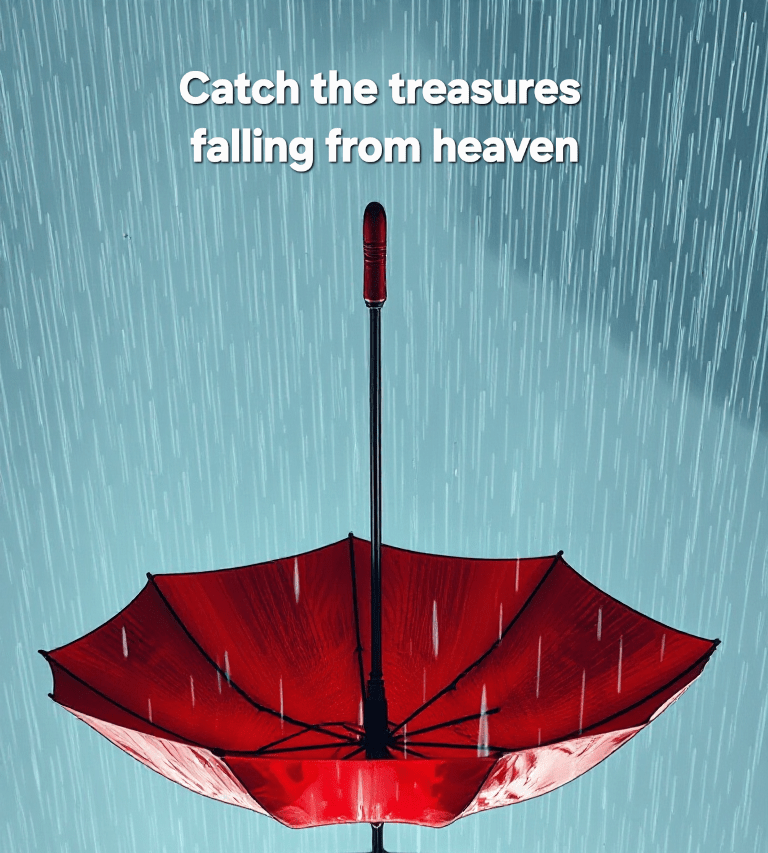
Wise lyrics that stuck in hearts for 90 years: Pennies from Heaven. “A long time ago, a million years BC 👍 the best things in life, they were totally free. But no one appreciated the sky that was always blue. And no one congratulated that the moon was always new. So it was planned (by Almighty God) that they would vanish now and then. And you must pay before you get them back again. So in His wisdom, God created storms to stir up emotions. He made them to cause us to look and praise Him for those blue skys again. They were made for us, so don’t be afraid, for every time it rains, it showers us with pennies from heaven.” PEACE IN THE RAIN ❤️


Has your blog have any uptick of views form any particular country? My blog has a lot of views this past week wondering if it is a bot..
LikeLike
Not more activity than usual for me. But you reach a wider audience. God bless you and your ministry.
LikeLiked by 1 person
God bless you Barbara
LikeLike
Age 75 now got convicted at age 24, saved out of being a lukewarm Catholic and my hunger has never been fully satisfied. I am pretrib and have been so well taught by Amir, Pastor Jack, and many others. Prophecy Watchers like Chuck Smith, Tim LaHaye, Wilkerson, Anne Graham Lotz, peace came as I leaned on Holy Spirit for my understanding.
LikeLiked by 1 person